What is a Birthday?
How birthday customs developed, why they vary, and what the date can mean to different people.
Browsing birthdays?
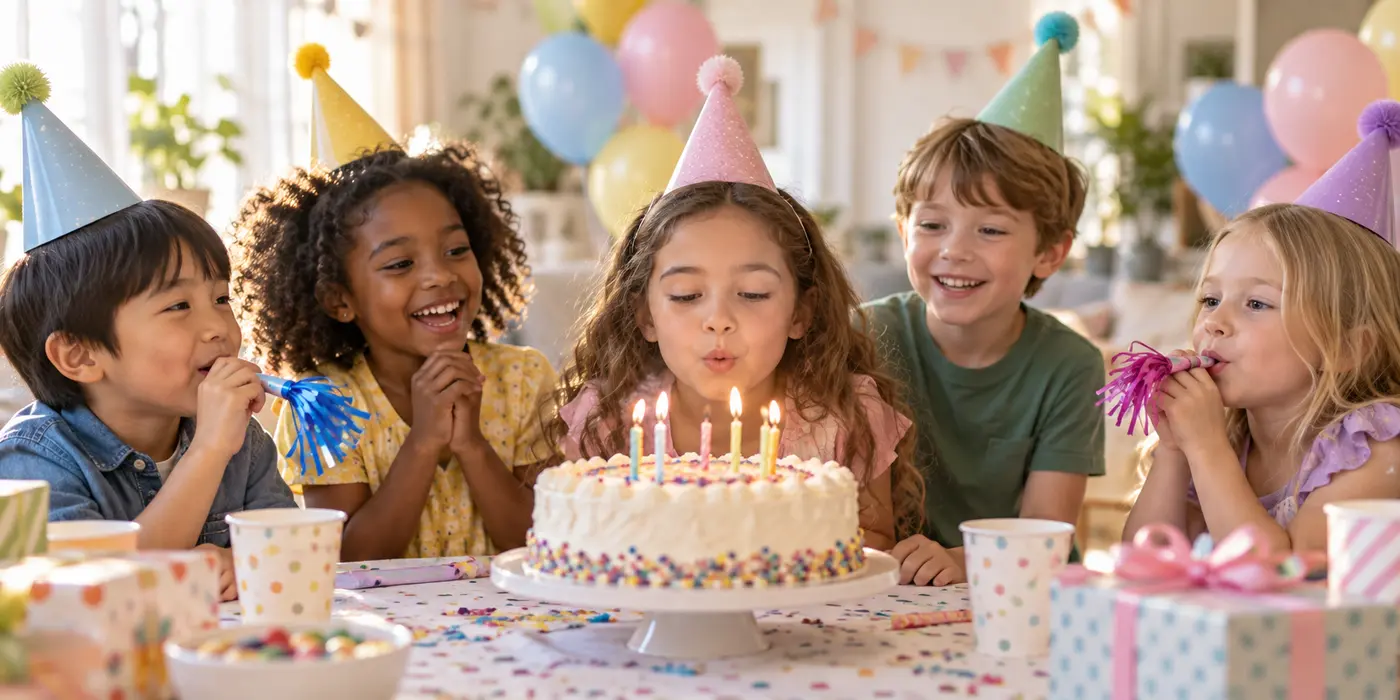
What is a birthday?
A birthday is the yearly anniversary of a person’s birth. People mark it in many ways: a party, a meal, a message, a religious observance, or nothing at all. The date is shared; its importance is personal and cultural.
The ancient origins of birthdays and cake
The concept of a birthday developed across different cultures and periods rather than beginning in one place. Ancient Egyptian royal ceremonies are often discussed because a pharaoh’s accession could be treated as a symbolic rebirth, but that was not the same as a modern personal birthday party for everyone.
Romans recorded individual birthday observances, especially for men and important milestones. In ancient Greece, moon-shaped cakes and lights were offered in religious festivals connected with Artemis. This is a possible cultural parallel, not proven evidence that modern birthday candles directly descended from those offerings.
The familiar cake-and-candle combination became more widespread in eighteenth-century German children’s celebrations, often associated with Kinderfest. Some accounts describe candles representing the years of a child’s life and an extra candle for a wish, but the details varied. As industrialisation made sugar, flour and baked goods more accessible, birthday cakes spread beyond wealthy households and families adapted the custom in different ways.
Cake and candles therefore carry layers of symbolism—sweetness, light, wishes, memory and the passage of time—but no single origin story explains every modern birthday tradition.
The Happy Birthday song
The melody began as “Good Morning to All,” a classroom song published in 1893 and associated with American sisters Patty and Mildred Hill. The familiar birthday lyrics developed later and appeared in print in the early twentieth century.
For decades, Warner/Chappell claimed copyright over the lyrics and collected licensing fees for some public and commercial uses. In 2015, a U.S. court found that the company had not proved ownership of a valid copyright in the lyrics. A 2016 settlement and judgment resulted in the song being treated as public domain in the United States. Copyright rules can differ by country, and a particular recording or arrangement may have separate rights.
The song’s history also shows why a familiar tradition can have a complicated paper trail: its melody, lyrics, publications, arrangements and later claims were not all legally identical.
Why birthdays matter
Birthdays can be joyful, nostalgic, difficult or ordinary. They may offer a moment to recognise how far someone has come, reconnect with others, or simply make the passage of time feel personal.
A birthday can be a small ritual of belonging: cake, candles, music, a card, a blessing, a favourite meal or a quiet conversation. None of these is required for a birthday to matter. The most respectful approach is to ask what the person actually wants.
Common birthday traditions around the world
Birthday traditions vary widely. Some focus on family blessings, some on food and music, and others on symbolic wishes, longevity or gratitude. In Mexico, a celebration may include the birthday song Las Mañanitas and, especially for children, a piñata. A quinceañera may mark a girl’s fifteenth birthday with an important family and cultural celebration in some Latin American communities, though it is not universal.
In China and Chinese communities elsewhere, longevity noodles may express a wish for a long life. In South Korea, miyeokguk (seaweed soup) is associated with birthdays and can connect the occasion with remembrance of a mother’s care after childbirth. Japan’s Shichi-Go-San is not a birthday party, but an age-based childhood festival associated with ages three, five and seven, showing how childhood milestones can be marked outside the annual birthday.
In parts of South Asia, family blessings, religious observances, cake-cutting and shared meals may all be part of a birthday, depending on the family. German children’s birthdays may feature cake, candles, gifts and traditional group games. Parties, cards, gifts and surprise celebrations are common in Canada and the United States. These examples do not represent everyone in those countries—families, religions, regions and individuals differ.
Birthday songs and greetings also vary across cultures. The familiar English-language song has travelled widely, while communities continue to use their own languages, music and traditions. The date may be shared, but the way it is observed is personal.